Drone Survey Services in Smithfield, UT
Fast-growing Cache Valley city with Wasatch Mountain backdrop and agricultural-to-residential valley expansion
Serving Cache County & the Logan Metropolitan Area area
Request a Free Quote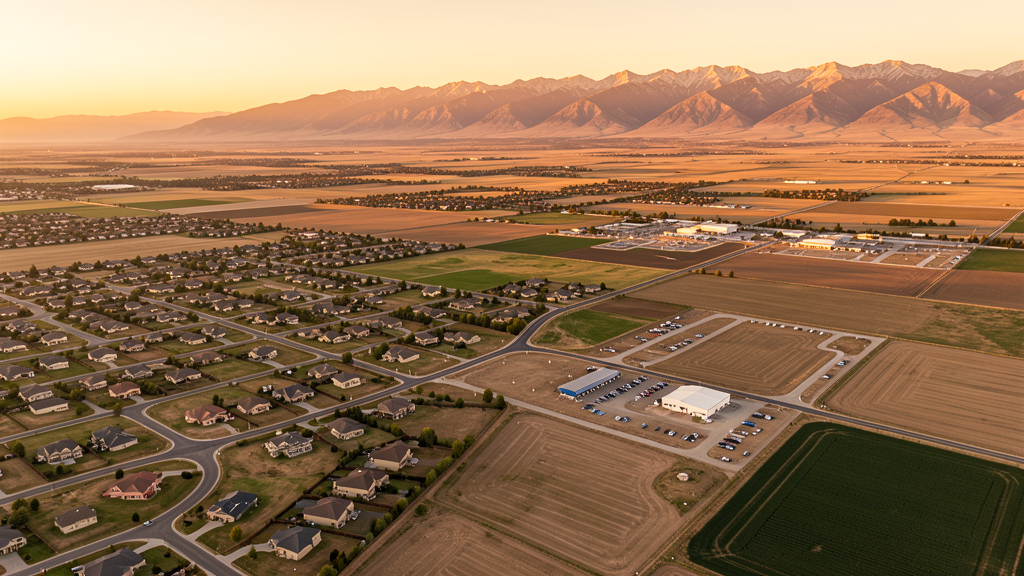
Get Matched With a Local Surveyor
Drone Survey Services Available in Smithfield, UT
Smithfield is one of the fastest-growing cities in Cache Valley. Construction is driven by residential subdivision expansion, the Smithfield commercial corridor along Main Street, and the growing Utah State University satellite influence.
Drone Surveys for Smithfield's Construction Market
Smithfield is one of the fastest-growing cities in Cache Valley. Construction is driven by residential subdivision expansion, the Smithfield commercial corridor along Main Street, and the growing Utah State University satellite influence. The city has significant agricultural-to-residential land conversion. The east bench has hillside residential development with Wasatch Mountain views.
Active Developers in the Area:
- Smithfield residential developers — Large-scale residential subdivision construction expanding north and east
- Main Street commercial corridor — Retail and service commercial development along Main Street
- East bench developers — Hillside residential construction with mountain views

Typical Project Costs in Utah
Cost ranges are based on market data for Logan Metropolitan Area. Actual pricing depends on site size, complexity, and deliverables.
| Service Type | Low End | High End |
|---|---|---|
| Topographic Survey | $1,800 | $8,000 |
| Drone Inspection | $600 | $3,500 |
| LiDAR Scanning | $3,000 | $14,000 |
| Environmental Monitoring | $1,500 | $7,000 |
| Aerial Imagery | $400 | $2,500 |
| Construction Monitoring | $800 | $4,500 |
| Real Estate Photography | $350 | $2,000 |
| Roof Inspection | $400 | $2,000 |
Local Airspace & Regulations in Smithfield, UT
FAA Part 107 Requirements
All commercial drone operations in Utah require the pilot to hold an active FAA Part 107 Remote Pilot Certificate. Our network surveyors are verified Part 107 holders.
State Drone Laws
Utah enacted SB 167 (2019), establishing state authority over UAS operations and preempting local municipalities from regulating drone flight paths, airspace, or pilot requirements. SB 210 (2021) added privacy protections and restrictions on drone surveillance of private property. Utah has significant restricted military airspace including Hill Air Force Base (home to F-35 and F-16 fighter wings and the Ogden Air Logistics Center), Dugway Proving Ground, and Utah Test and Training Range. The state also has extensive National Park and National Monument no-drone zones, including Zion, Bryce Canyon, Arches, Canyonlands, Capitol Reef, and Grand Staircase-Escalante. Commercial operators must hold a valid FAA Part 107 Remote Pilot Certificate. Utah does not require a separate state drone license. Operators flying near military installations, national parks, tribal lands, or ski areas must coordinate with the controlling agency. Utah mountain terrain and winter weather create significant operational challenges, with density altitude affecting performance at elevations above 5,000 feet and winter storms limiting flying windows.
Local Ordinances
Smithfield follows FAA Part 107 regulations. Under Utah state law (SB 167, 2019), only the state may regulate drone flight paths. The city is in the Cache Valley with mountain terrain to the east. Winter temperature inversions can create poor visibility and cold operating conditions.
Restricted Airspace
- Logan-Cache Airport Class E surface area
- Wasatch Mountain terrain to the east
- Cache Valley inversions creating low visibility conditions
Airports in the area: Logan-Cache Airport (LGU)
Why Hire Through Aerius View in Smithfield, UT?
FAA-Certified
Every surveyor holds an active Part 107 Remote Pilot Certificate.
Local to Smithfield
Surveyors who know the Utah airspace and local permitting.
No Cost to Quote
Submit your project at no charge. Pay the surveyor directly if you proceed.
Fast Turnaround
A local surveyor contacts you within 2 business days.
How Our Smithfield Matching Process Works
We're actively building our network of FAA-certified drone operators in Smithfield, UT. Here's exactly what happens when you submit a project request.
Submit Your Project
Tell us your site location, acreage, and what you need (topographic survey, LiDAR, inspection, etc.). Takes 60 seconds. No cost, no obligation.
We Match & Vet
We identify Part 107-certified operators in Utah with the right equipment for your project. Every pilot is verified for active certification, insurance, and relevant experience in Utah airspace.
You Get Quotes
Matched surveyors contact you within 2 business days with quotes. You compare pricing, timelines, and deliverables, then choose the right fit. You pay the surveyor directly, no markup.
What Deliverables Do You Get?
Every project includes professional-grade deliverables compatible with standard construction and engineering software:
- Orthomosaic maps (GeoTIFF) for site overview and documentation
- Point clouds (LAS/LAZ) for 3D modeling and volumetric analysis
- DEM/DSM terrain models for cut/fill and grade analysis
- Contour lines (DXF/DWG, CAD-ready) for Civil 3D and Revit
- Progress reports with side-by-side comparisons for construction monitoring
- Coordinate systems matched to your project datum (State Plane, UTM, or local)
Insurance & Liability Protection
Pilot Insurance Required
Every operator in our network must carry active liability insurance. Minimum coverage: $1,000,000 general liability. Proof of insurance is verified before any pilot joins the network.
FAA Part 107 Verified
We confirm each pilot's Remote Pilot Certificate is active and in good standing through the FAA Airmen Inquiry system. Expired certificates are flagged automatically.
Equipment Documentation
Pilots list their drone models, sensors (RGB, LiDAR, thermal, multispectral), and payload specs so we can match the right equipment to your project requirements.
Site Safety Coordination
Pilots coordinate with your site superintendent for safe operations on active construction sites, including flight plans that avoid worker areas and equipment zones.
Smithfield, UT Drone Survey FAQs
What makes Smithfield unique for drone survey in Utah?
Smithfield is one of the fastest-growing cities in Cache Valley with significant agricultural-to-residential land conversion. The east bench hillside development and valley floor subdivision expansion create diverse survey needs. The Cache Valley location creates unique winter inversion conditions that affect drone operations. The mountain backdrop provides scenic but challenging operating terrain.
What drone services are most needed in Smithfield?
Residential subdivision survey and construction monitoring are the dominant demands. Agricultural-to-residential land conversion requires topographic surveys. The east bench hillside development creates specialized survey needs. Real estate photography for new construction is a growing market.
Is Smithfield in controlled airspace?
Smithfield is near the Logan-Cache Airport Class E surface area. The Cache Valley has fewer airspace restrictions than the Salt Lake Valley. LAANC authorization may be required depending on altitude. Check the LAANC grid for your specific area.
How does Smithfield elevation affect drone flying?
Smithfield sits at approximately 4,600 feet elevation in the Cache Valley. The elevation reduces drone performance. Winter temperature inversions can create low visibility and extremely cold operating conditions. The mountain terrain to the east creates afternoon thermal winds. Summer temperatures above 90 degrees create density altitude challenges.
Does Smithfield have its own drone ordinances?
No. Under Utah state law SB 167 (2019), only the state may regulate drone flight paths. Smithfield follows FAA Part 107 regulations without additional local drone-specific ordinances.
What is the impact of Cache Valley winter inversions on drone survey?
Cache Valley winter inversions trap cold air and particulates in the valley, creating poor visibility and extremely cold temperatures. Drone battery performance drops significantly in cold conditions. Flight planning should account for reduced visibility and shorter battery life. Inversion conditions can persist for days during winter months.
Nearby Cities
Are You a Drone Surveyor in Smithfield?
Get pre-qualified leads in your service area. No membership fees, no monthly minimums. First lead free.
Ready to Start Your Project in Smithfield, UT?
Get matched with a local, FAA-certified surveyor. No cost, no obligation.
Request a Free Quote